How to Declutter Your Home Room by Room: The Complete Beginner's Guide
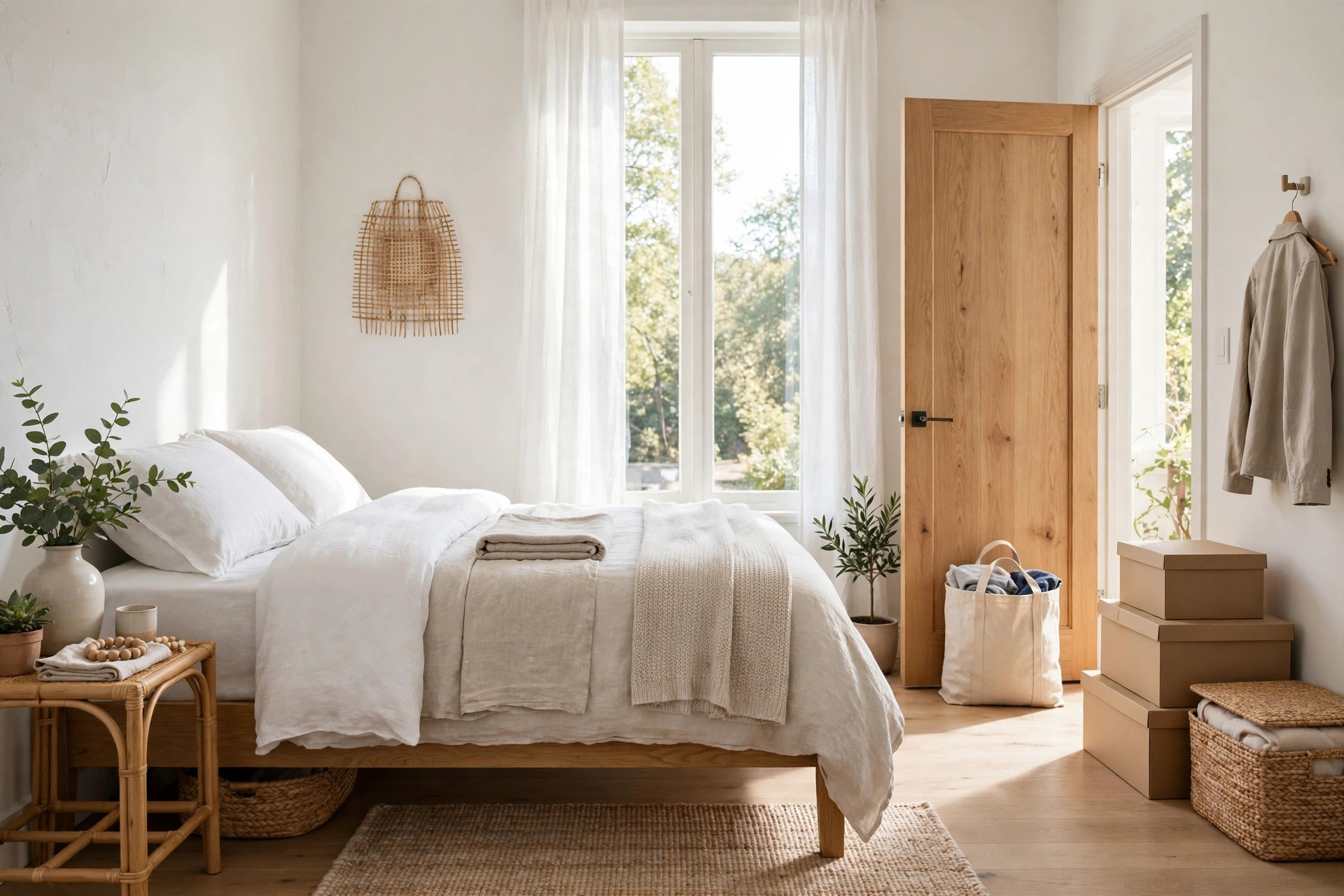
Stand in your doorway and take an honest look around: the closet that won't quite close, the drawers that stick, the junk drawer that has quietly become three. If you've been wondering how to declutter your home but feel stuck before you've even begun, take a breath — this guide was written for exactly you.
Here's what you'll learn: where to start (and the one area to avoid until the very end), a dead-simple 4-box method for sorting everything you own, how to push through decision fatigue when your brain wants to quit, the order to tackle your rooms in, and how to keep your home clutter-free once the work is done.
No perfection required. No judgment. Just a clear, doable path from cluttered to calm, one room at a time.
Where to Start (and Where NOT to Start)
The biggest mistake beginners make is starting with the hardest space. The garage, the attic, or the storage unit feels tempting — if I just conquer the big one, the rest will be easy. It won't. Those spaces are full of heavy, dusty, emotionally loaded decisions, and they drain your energy fast. Save them for last, when your decluttering muscles are strong.
Instead, start somewhere small and winnable. Your bathroom or bedroom closet is perfect: the decisions are straightforward, the space is contained, and you can finish in a single afternoon. Every completed space proves you can do this, and that momentum carries straight into the next room.
The 4-Box Method: Your Decluttering Game Plan
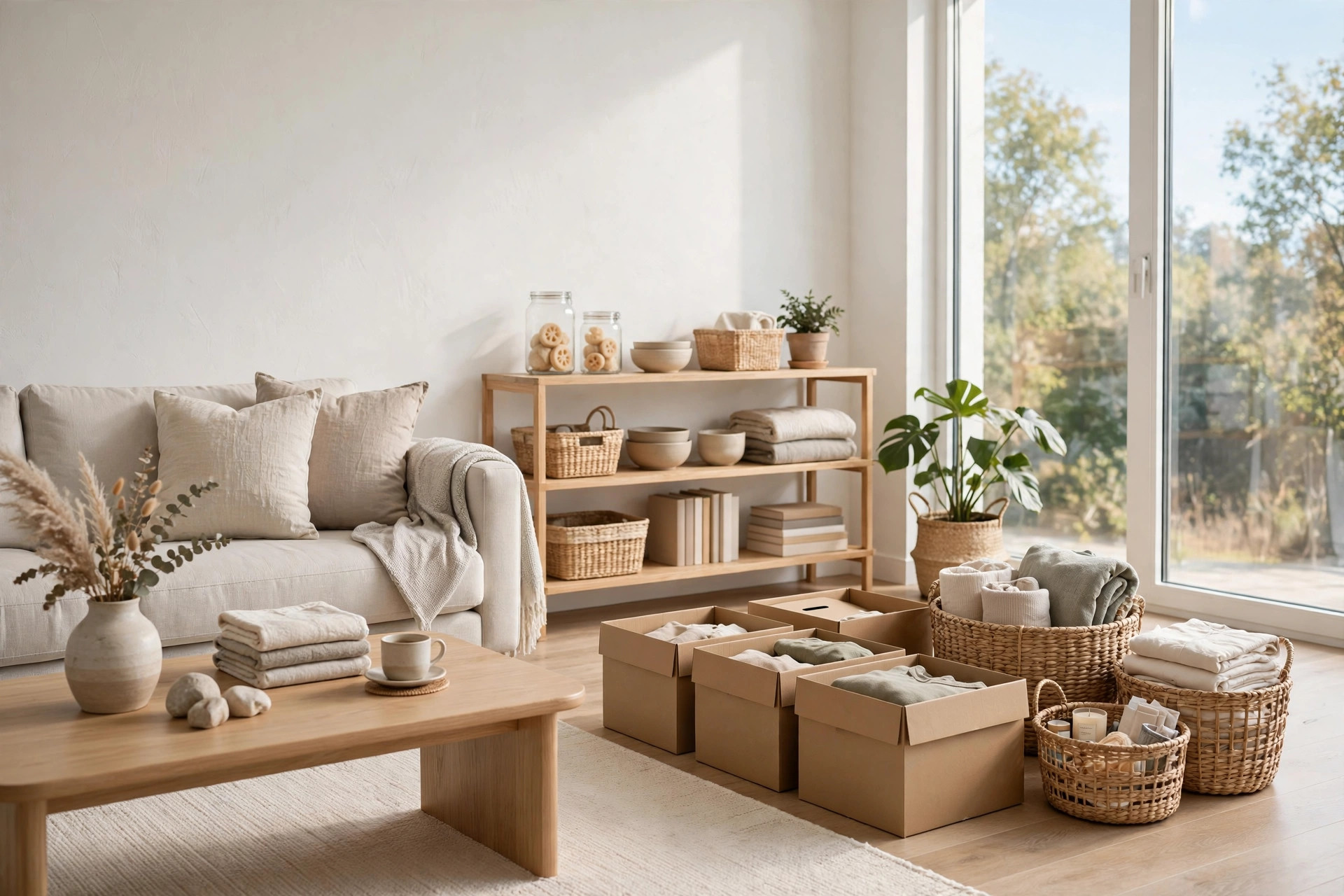
Before you touch a single item, grab four boxes or bags and label them. Every single thing you pick up goes into one of these four — there is no fifth "maybe" pile, because "maybe" is just clutter with a nicer name.
Box 1: Keep
Things you use, need, or genuinely love. Be honest with yourself here. "Keep" means it earns its place, not that it merely exists in your home.
Box 2: Donate or Sell
Items in good condition someone else could use: clothes that don't fit, duplicate kitchen tools, finished books. Put sellable items here too — but if something isn't listed or dropped off within a week, donate it instead of letting boxes sit in your hallway for months.
Box 3: Relocate
Things that belong in a different room — the screwdriver in the bathroom, the library book on the kitchen counter. This keeps you from wandering mid-session; when it's full, do one quick trip to put everything where it lives.
Box 4: Toss or Recycle
Broken, stained, dried out, missing parts, or genuinely used up. This includes expired pantry items, dead batteries, and pens that gave up years ago. Check your city or pharmacy website for safe disposal options for things like old medications and electronics.
Work one small zone at a time — a single drawer, one shelf, half a closet — and finish it before moving on. Golden rule: sort everything before you organize anything. Don't buy a single bin or basket until you know exactly what you're keeping, or you'll just store clutter in pretty containers.
How to Beat Decision Fatigue
Decision fatigue is the real enemy of decluttering. Around item fifty, your tired brain starts voting "keep" on everything just to be done. That's normal — and you can plan around it:
- Set a 15-minute timer — you can do anything for 15 minutes. When it rings, stop guilt-free, or keep going if you're on a roll. Short sessions beat marathons.
- Ask one question: "Would I buy this again today at full price?" If no, out it goes. This cuts through sentimentality and sunk-cost thinking fast.
- Handle each item once. Pick it up, decide, drop it in a box. The moment you start a "decide later" pile, you've just moved the clutter instead of removing it.
- Don't dig through the finished boxes. Once something lands in Donate or Toss, it's gone. Second-guessing is decision fatigue talking, not wisdom.
- Take breaks between zones. Step outside, get some water, come back fresh. A tired brain keeps everything.
How to Declutter Your Home: The Best Room-by-Room Order
Follow this order and each room builds your skills for the next one — easy decisions first, hard ones last.
1. Bathroom
Start here for the easy win: toss expired sunscreen, dried-out lotions, makeup older than a year, and dated medications. Keep only the products you actually reach for, corralled into one small basket per person.
2. Bedroom Closet
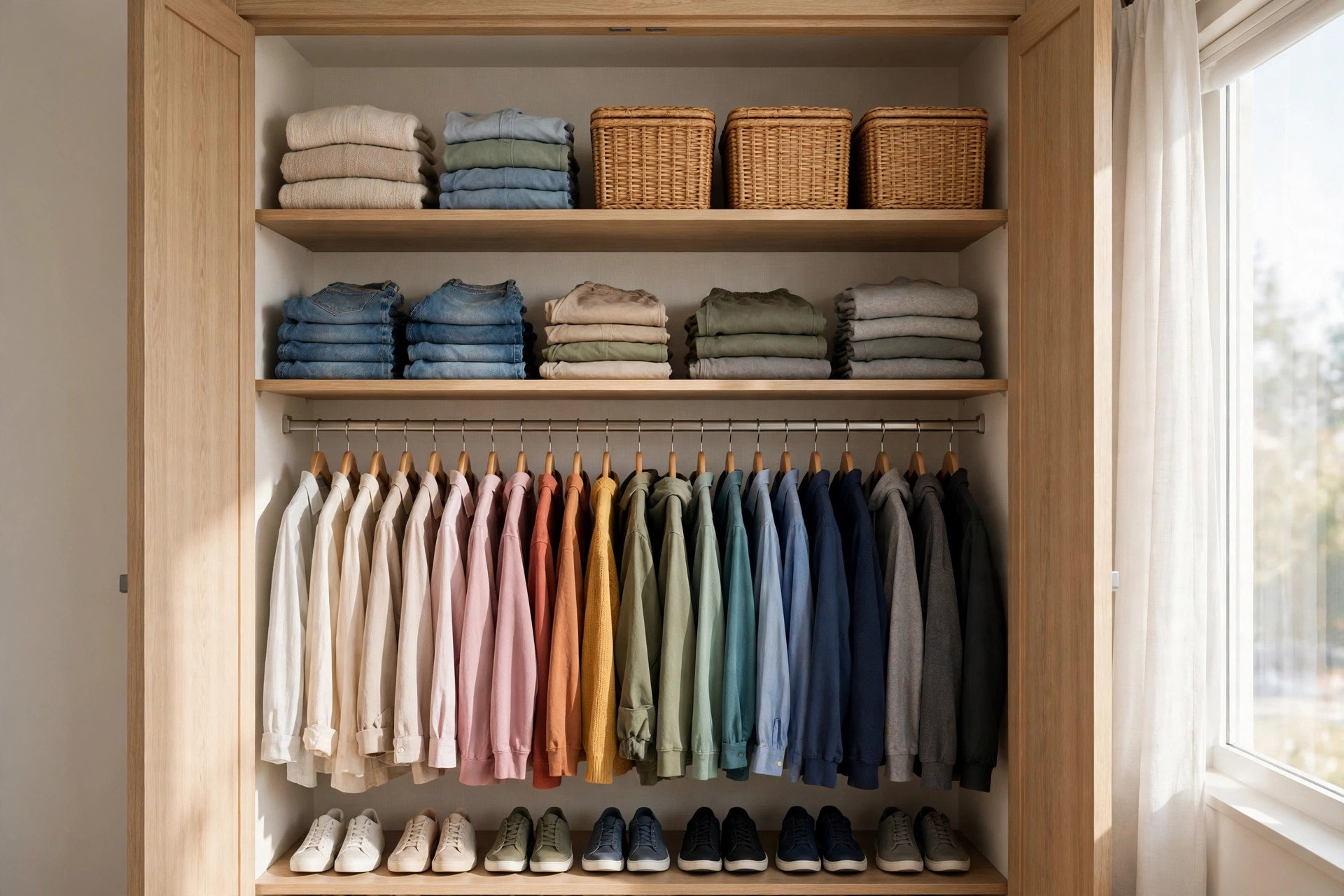
Try on the question marks. If it doesn't fit, is damaged beyond realistic repair, or you haven't worn it in a year, donate it. Turn the hangers of uncertain keepers backward — if one never turns around in six months, that item can go.
3. Kitchen
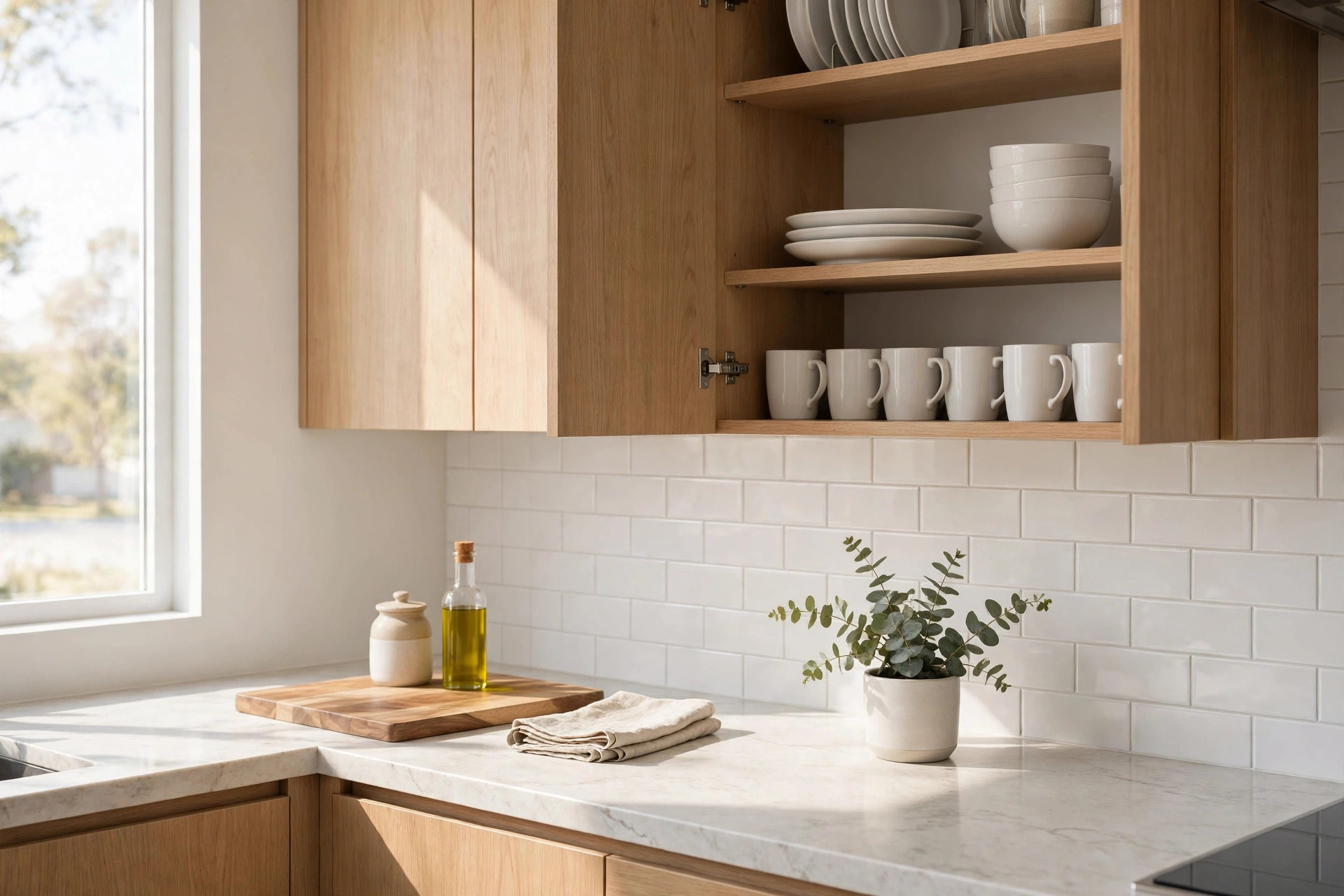
Empty one cabinet at a time so you can spot duplicates. Chipped mugs, lidless containers, and single-use gadgets you used once are easy releases. Aim for clear counters: any appliance not used at least weekly doesn't earn counter space.
4. Living Room
Magazines and catalogs recycle instantly. Test every remote, charger, and cable — if you can't name what it powers, it goes. Donate throw pillows and blankets you never reach for, and books you'll never reread.
5. Bedrooms
Clear nightstands down to what you use daily. Under-bed storage is prime real estate — reserve it for off-season bedding, not hidden clutter. If clothes live on "the chair," your closet system needs simplifying.
6. Home Office and Desk Area
Paper is the boss level of clutter: shred or recycle anything you can access online. Keep one inbox tray for incoming mail and process it weekly. Test every pen — the dead ones go straight in the trash.
7. Entryway and Laundry Room
Shoes multiply by the front door — keep one pair per person per season by the entrance and store the rest in closets. Match the single socks, toss the stretched-out ones, and keep a small donation bag here for easy drop-offs on your way out.
8. Garage, Attic, and Storage Spaces
Now you're ready — your decision muscles are warmed up. Sort by category (holiday decor, tools, sports gear), and be honest about "someday" projects: if someday hasn't come in two years, it isn't coming.
How to Keep It Decluttered for Good
Decluttering once is a project. Staying clutter-free is a habit, and it only takes a few small ones:
- One in, one out. A new shirt means an old one leaves. This single rule prevents most re-cluttering.
- The 10-minute nightly reset: return everything to its home before bed. Waking up to a tidy space changes your whole morning.
- Keep a donation box going in a closet and toss things in as you notice them. When it's full, drop it off — no special trip required.
- Pause before you buy. Wait 24 hours on non-essential purchases. Most "must-haves" lose their shine overnight.
- Do a seasonal mini-declutter: four times a year, walk each room with a trash bag and a donation bag. Fifteen minutes per room keeps the slow creep in check.
Frequently Asked Questions
How long does it take to declutter a whole house?
Plan on a few weeks of steady sessions rather than one heroic weekend. Most people do best with 15 to 30 minutes a day — it's far more sustainable, and the results compound quickly.
What should I do with sentimental items?
Don't start with them. Set sentimental things aside in one box, declutter everything else first, and decide on them last when your skills are sharpest. Keep the best representatives of a memory — the favorite photo, not all fifty — and consider photographing bulky keepsakes before letting them go.
Should I clean before or after decluttering?
Declutter first, then clean. There's no point dusting shelves you're about to empty or scrubbing around piles you're about to remove. Once a space is sorted, cleaning it takes a fraction of the time.
What if the rest of my household won't declutter?
Only declutter your own belongings — never toss someone else's things without permission. Start with shared spaces like the kitchen and living room, where the benefits are obvious. Your results are contagious; most reluctant family members come around once they see how good the finished rooms feel.
Where should I take donations?
Most communities have thrift stores, charity shops, or shelters that accept household goods and clothing. Check what each location accepts before you load up the car. For furniture or large items, many charities offer free pickup — schedule it the day you finish a room so boxes don't linger.