How to Organize Food Storage Containers (End the Tupperware Avalanche)
You know the sound. That unmistakable clatter-thump-slide of plastic containers crashing forward the moment you crack the cabinet door open. Somewhere in that pile is a lid that matches something. Probably. If you're lucky.
If you want to organize food storage containers once and for all, this guide has you covered. You'll learn how to purge your collection down to what you actually use, apply the "match lids to bases" rule, compare the best storage methods (vertical lid filing, nesting, drawer versus cabinet), build a lid organization system that survives real life, figure out what a reasonable set looks like for a small household, and keep the whole thing tidy long-term.
Why Container Cabinets Always Spiral Out of Control
Food storage containers are the rabbits of the kitchen. They arrive a few at a time — a set bought on sale, freebie containers from takeout, that one glass container with the snap-lock lid you received as a gift — and somehow multiply in the dark.
The real problem is the mismatch factor. Lids and bases separate in the dishwasher, get stored in different spots, and eventually you own a collection of singles that will never meet their partners. Add in warped plastic and mystery stains, and you've got a cabinet that fights you every time you open it.
The fix isn't buying more organizers (though a few help). It's shrinking the collection to what you use and giving everything a home.
Step 1: The Full Purge
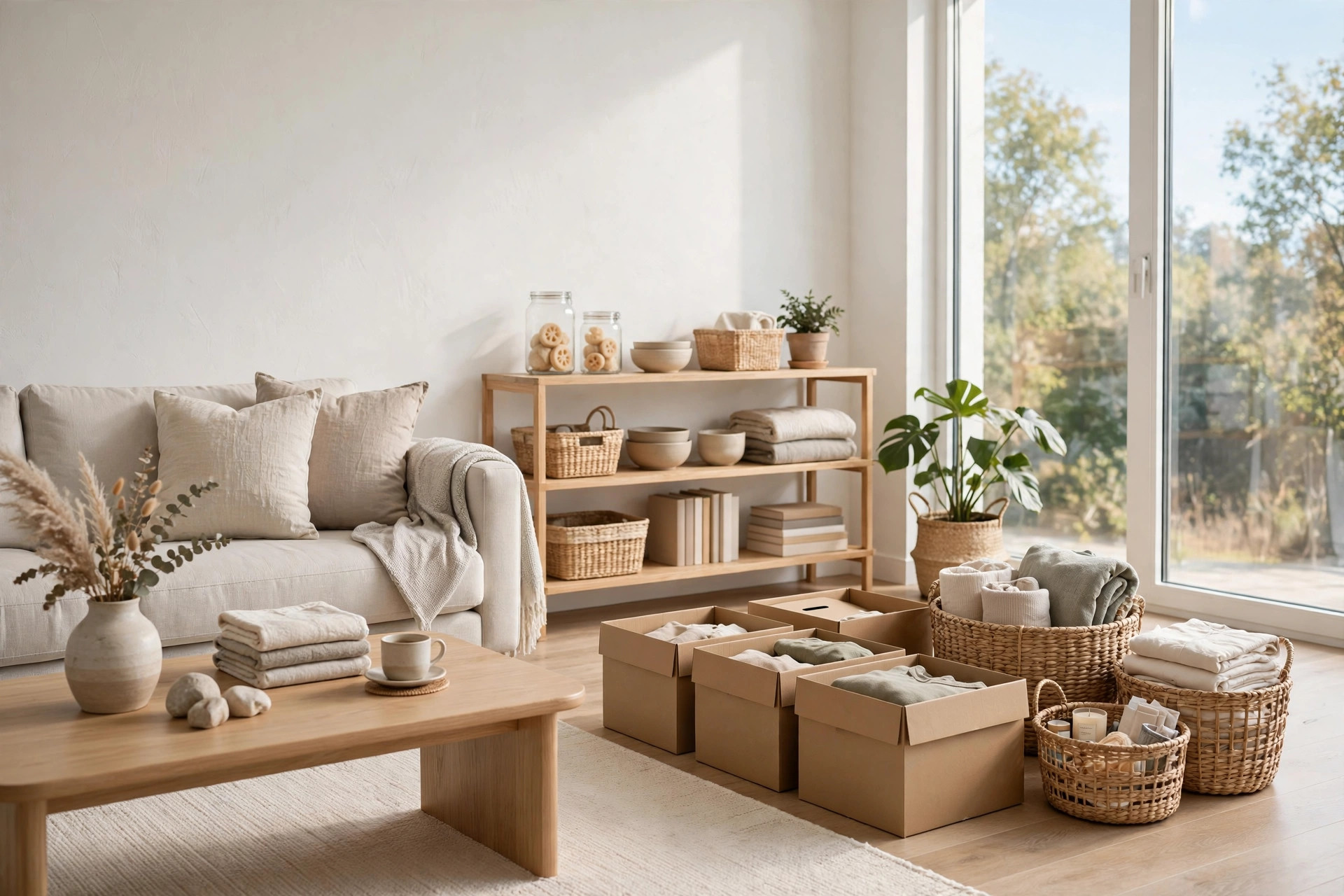
Pull every single container and lid out of the cabinet or drawer and pile them on the counter or table. Yes, all of them. You need to see the full collection at once — this is the part that makes people gasp.
Toss or recycle without mercy
Be honest and get rid of any piece that falls into these categories:
- Warped bases that won't seal or stack properly anymore
- Stained or cloudy plastic that still smells like last month's curry no matter how many times you wash it
- Cracked lids or containers — bacteria love cracks, and seals that don't seal are just sad bowls
- Melted or chewed-up pieces (microwave accidents happen; let them go)
- Lonely lids or bases with no matching partner
- Containers you never reach for — the tiny ones too small for anything useful, the giant ones that fit nowhere
If a container is still usable but you simply don't need it, donate it. Food pantries, shelters, and community kitchens often welcome extra containers.
The match test
Now play matchmaker. Every base gets its lid, every lid gets its base. Anything left single after a genuine search goes into a "purgatory box" for one week. If the missing partner doesn't turn up, recycle it. The matching rule from here on out: a lid and base only count as one container if they match. Unmatched singles don't earn cabinet space.
Step 2: Decide on Your Storage Method
There's no single correct way to store containers — the best method is the one you'll actually maintain.
Nesting bases, filing lids vertically
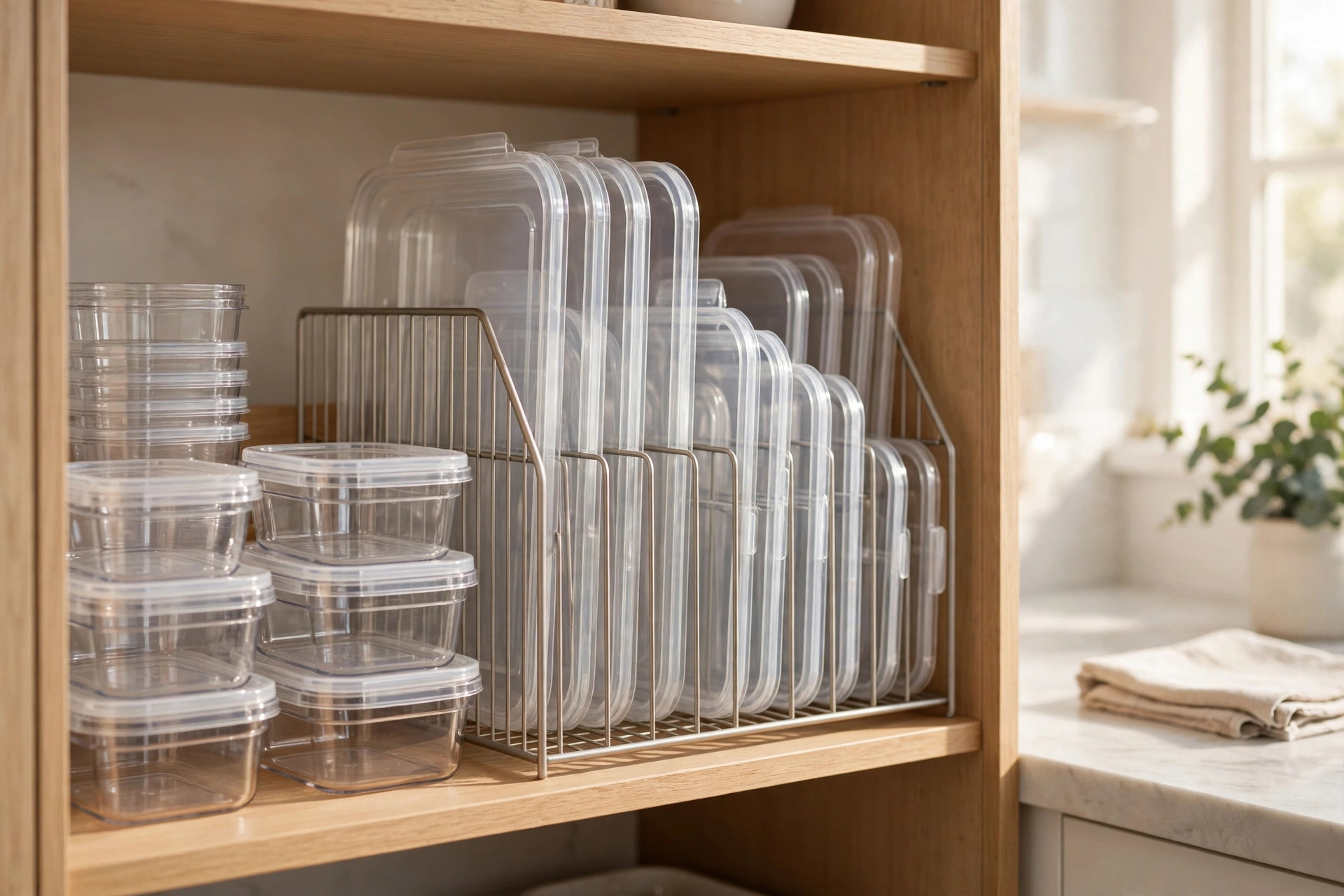
This is the most popular method, and for good reason. Bases nest inside each other (largest on bottom, smallest on top), and lids stand upright in a file organizer, dish rack, or small tension-rod setup.
Pros: Takes up minimal space, easy to see all your lids at a glance, works in cabinets and drawers. Cons: Round lids in a vertical file can topple if the file isn't full enough; very deep cabinets make the nested stack hard to reach.
Storing lids on their containers
Put the lid on loosely before shelving the container. Everything stays matched — no hunting, ever.
Pros: Zero lost lids, grab-and-go simplicity. Cons: Takes up roughly twice the space. Only practical if you have a generous cabinet or a small collection.
Drawer versus cabinet
If you have a deep drawer near your prep area, it's arguably the best home for containers. Drawers pull out fully, so nothing gets lost in the back, and lids can file vertically right alongside nested bases. Cabinets work fine too, but the deeper the shelf, the more likely things get shoved to the back and forgotten. If your cabinet is deep, store the least-used sizes in the back and daily-use containers up front.
Step 3: Build a Lid Organization System
Lids are the true villains here. Bases behave; lids rebel. Give them structure:
- Use a vertical file organizer. A simple metal or plastic file sorter, a plate rack, or a purpose-built lid organizer keeps lids upright and visible. This is the single highest-impact purchase for this project.
- Group by size, not by set. All small lids together, all medium lids together, all large lids together. When you're in a hurry, you reach for a size, not a brand.
- Contain the strays. Keep one small bin or tray for oddball lids — the ones from yogurt tubs, takeout containers, or that one glass set with the weird clips. If the bin overflows, it's time for another purge.
- Decant the dishwasher directly into the system. This is where most systems die. When you unload clean lids, file them immediately instead of tossing them on top of the pile. Thirty seconds now saves a ten-minute reorganization later.
What a Reasonable Set Looks Like for a Small Household
One of the hardest questions: how many containers do you actually need? For a household of one to three people, here's a sensible baseline:
- 4–6 small containers (1–2 cups): sauces, dressings, leftovers from a single meal, packed snacks
- 4–6 medium containers (3–4 cups): the workhorses — most leftovers land here
- 2–3 large containers (6+ cups): batch cooking, marinating, storing produce
- 2–3 specialty pieces if you use them regularly: a salad spinner bowl, a set of meal-prep containers, or glass containers for reheating
That's roughly 12–18 containers total. If your household is larger or you batch-cook heavily, scale up the medium and large sizes. The test: can you put away a full round of leftovers and still have a few clean containers left? Then you have enough.
A note on materials: glass containers last longer, don't stain, and go straight from fridge to microwave to table. They're heavier and pricier, but replacing your most-used plastic pieces with glass over time is a solid upgrade. Keep plastic for freezer storage and kid lunches, where lightweight and shatterproof win.
Keeping It That Way
The purge feels great. The reorganization feels even better. But six months from now, the avalanche will return unless you build in a little maintenance.
- One in, one out. Buy a new container? An old one leaves. No exceptions, no "but this one might be useful."
- Quit accepting freebie containers you don't need. Rinse and recycle the takeout tubs unless you're genuinely short on a size.
- Do a five-minute reset monthly. Pull out the lids, re-file them by size, and pull anything that's cracked, warped, or unmatched. Set a phone reminder if you have to.
- Watch the dishwasher drop zone. The number one cause of re-chaos is clean lids getting tossed vaguely in the direction of the cabinet. Take the extra seconds to file them properly.
Frequently Asked Questions
How do I organize food storage containers in a deep cabinet?
Store lids vertically in a file organizer at the front of the shelf and nest bases behind them, least-used sizes in the back. If things still get lost, move the collection to a deep drawer — full-extension access makes a huge difference.
What's the best way to store container lids so they don't get lost?
File them upright in a vertical organizer, grouped by size. The key habit is filing lids immediately when unloading the dishwasher instead of stacking them loosely on top of everything.
How many food storage containers should I own?
For a small household of one to three people, 12–18 containers is plenty: mostly small and medium sizes, a few large ones, and whatever specialty pieces you genuinely use weekly. If you can handle a full round of leftovers with a few spares left over, your collection is the right size.
Should I switch from plastic to glass containers?
Glass lasts longer, resists stains and odors, and reheats well — a great upgrade for your most-used pieces. Plastic still wins for the freezer and lunches, since it's lightweight and won't shatter. Replace pieces as they wear out; no need to switch everything at once.
How do I stop my container cabinet from getting messy again?
Follow a one-in-one-out rule, stop keeping takeout containers you don't need, and do a quick five-minute lid re-file once a month. The biggest factor is the dishwasher habit: put clean lids directly into their vertical file instead of tossing them into the cabinet.